Myth or Magic: Are Fairy Tales for Kids?

I got a really great question in the comments of my last Myth or Magic post (leave your own for me to answer in future installments):

Why did Disney pick gruesome fairy tales and try to make them the happily ever after versions we know? Were there no happy and well written fairy tales they could have started with instead?

DisneyFantatic35

And, well, I can’t really answer that question, as I don’t work for Disney and couldn’t begin to pretend I understand the business practices and creative processes involved in choosing and adapting fairy tales. But it sparked a really interesting research tangent for me, and rather than let that time be wasted, I thought I’d share my findings.

Because the truth is, while we consider fairy tales to be a staple of children’s literature and media today, fairy tales weren’t actually created for kids.

Continue reading “Myth or Magic: Are Fairy Tales for Kids?”

The Brains Behind The Beauty (and the Beast)

Fairy tales are a beautiful genre of literature, tracing cultural mindsets and priorities through time and across the globe. Their origin as oral tales makes them profoundly unique, as no two tellings were ever exactly the same. But at the same time, that can make it hard for anyone to trace their history.

There have been countless people who have collected, transcribed, created, and otherwise contributed to the genre of fairy tales we know today. I’ve talked about some of them before, and those are the ones that most people (or most people with an interest in fairy tales) know about, the big names.

But they’re far from the only ones. And I thought it was high time I started highlighting some of those less-well-known fairy tale writers.

Continue reading “The Brains Behind The Beauty (and the Beast)”

8 Books to Read If You Love Wicked

Wicked: For Good premieres this week, and as a full-blown theater kid, you’d better believe I’m losing my mind about it. My best friend and braintwin (the Glinda to my Elphaba but with less drama in our shared history) is coming for a long weekend so that we can hole up in the theater with several boxes of tissues to watch the double feature of both films and almost certainly lose our cool.

And although I’m in the depths of writing a novel this month, I couldn’t help but put together a list of Wicked-inspired reads for fellow fans. Some of them I’ve read, some I’m adding to my own TBR.

Continue reading “8 Books to Read If You Love Wicked”

Beyond the Page: My 6 Favorite Fairy Tales on Stage

I’ll be the first to admit that the stage may be one of the hardest places to adapt a fairy tale. After all, a key element of any fairy tale is the magic that is inherently missing in our everyday life. While special effects can mimic magic, movies and animated features have an advantage in that respect over the stage’s reliance on practical effects, suspension of disbelief, and imagination on the audience’s part.

Nevertheless, there are many adaptations of fairy tales that have featured on stages around the world which, in my opinion, are magical in their own right.

Continue reading “Beyond the Page: My 6 Favorite Fairy Tales on Stage”

What’s In a Name

Romeo and Juliet has never ranked among my favorite of Shakespeare’s plays, but I have to admit there are some lines from it that have stuck with me.

“What’s in a name? That which we call a rose
By any other word would smell as sweet.
So Romeo would, were he not Romeo called,
Retain that dear perfection which he owes
Without that title.”

Romeo and Juliet, Act 2, Scene 2

It’s a beautiful sentiment Juliet expresses here, explaining that Romeo’s name, the hated name of her family’s enemy, doesn’t matter to her. It’s Romeo’s self that has captured her heart. If he changed his name, it wouldn’t change who he is.

But as the story plays out, the pair are unable to shed the burden of their names, which ultimately results in tragedy.

Names carry a lot of meaning in literature, especially in folklore, fairy tales, and mythology.

Continue reading “What’s In a Name”

The Bold, The Brave, and The Bloodthirsty

Cinderella is, perhaps, one of the most well-known and well-loved fairy tale heroines. She’s certainly one of my favorites, with variations and versions of her featuring in cultures around the world, both ancient and modern.

But Cinderella has faced her share of criticisms over the ages and different depictions. The one I see most often is that she is passive character rather than an active one, which I can’t really argue with (I can argue with the the claim that her passivity makes her weak, but that’s a rant for another soapbox).

However, that’s not the case for every Cinderella.

Continue reading “The Bold, The Brave, and The Bloodthirsty”

Why I Reread Books (Again)

The plight of any reader is their ever-growing TBR list and the sinking realization that there are more books in the world than they have the time and access to read. That’s certainly the case for me. So it often shocks people to realize just how often I reread books. After all, why waste time on something I’ve read before? Why not tackle a new book instead?

The short answer, of course, is simply that I enjoy it. I don’t need further justification. But I’ve been stewing on it lately, and I wanted share some thoughts on why rereading is important to me. (And for the second time this month, I find myself writing a blog post that I’ve apparently written before. Though in this case, it’s been almost a decade since that first post, so it’s interesting to see how my thoughts have or haven’t changed over the years.)

Part of it for me is simply logistics. According to Goodreads, I’ve read over forty books so far this year. That’s over a book a week, and it doesn’t even account for things like fanfiction (yes, I read book-length fanfiction on a regular basis) or the probably dozen or so books I read a year (some of them multiple times) for work. No matter how good my memory is, I’m going to forget details, or even entire stories, as time passes and new works take up space in my mind.

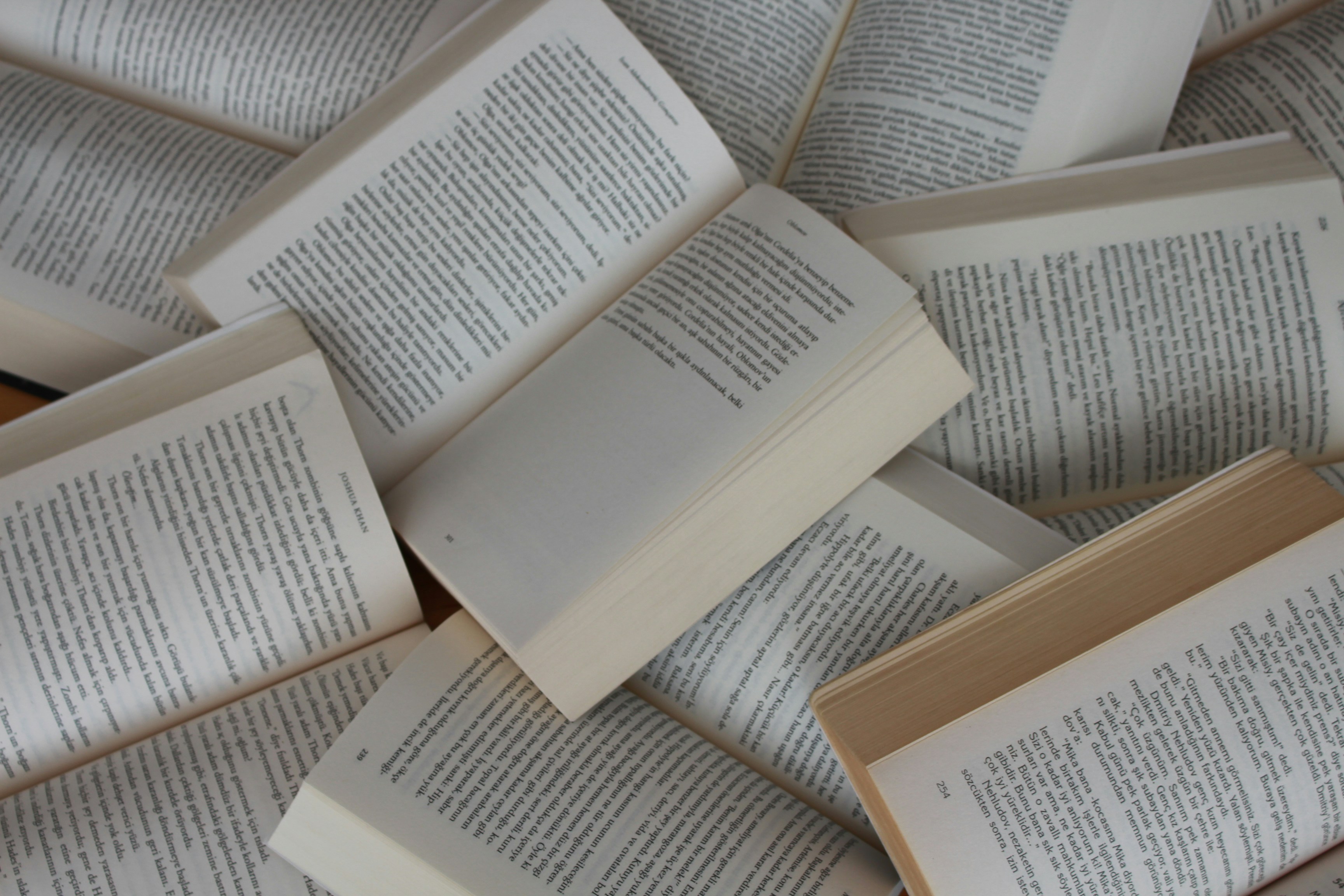
Photo by Gülfer ERGİN on Unsplash

I not only read a lot, I read very quickly. While I try to still read carefully, it’s inevitable that I skim over or entirely miss things. Rereading a book allows me to discover something new, whether it’s a piece of information I skipped or simply a different point of view I hadn’t considered.

Not to mention, writing and storytelling are my craft and my career. Reading and rereading books is how I study, how I analyze story and grow my own skills. I can trace the development of plot and character, study form and format, and analyze structure and flow. I see deeper themes and nuance that I might have missed the first time through.

And because stories are my passion, there’s comfort in revisiting old favorites. They’re like friends, and picking them up feels like resuming a conversation. Some of those books, like Little Women and Anne of Green Gables, were very formative to my growing up years. Revisiting them feels like revisiting my childhood.

Something that most people don’t know about me (and I’ve only actually realized in recent years) is that I have aphantasia. You probably don’t know what that is (as I said, I didn’t for the longest time) which isn’t surprising, as the term was only coined about ten years ago. In a nutshell, people with aphantasia don’t have visual memory or imagination. If you tell me to think about an apple, I’ll think of facts about apples. I don’t see an apple in my mind.

That might seem at odds with my passion for writing. A lot of people assume I see the story in my mind, playing out like a movie, and I write down what I see. And while that’s the case for a lot of writers, it’s not for me.

All this is to say that when I reflect on stories I’ve read in the past, I remember the broad strokes. I may even remember some specific passages. But if I want to relive any part of that story over again, I have to actually read the book. I can’t call up the imagery in my head.

Do you reread books? Why or why not?

Until next time, word nerds!

Myth or Magic: A Forgotten Face

Myth or Magic is back! That’s right, my favorite series that answers pressing questions and busts popular myths about fairy tales has returned with yet another question to answer. No one specifically submitted this question, but it’s one I’ve heard a lot over the years.

Why didn’t the prince (or anyone else) recognize Cinderella? Sometimes it seems like fairy tale characters are blind.

It’s a fantastic question – let’s dive in!

Continue reading “Myth or Magic: A Forgotten Face”