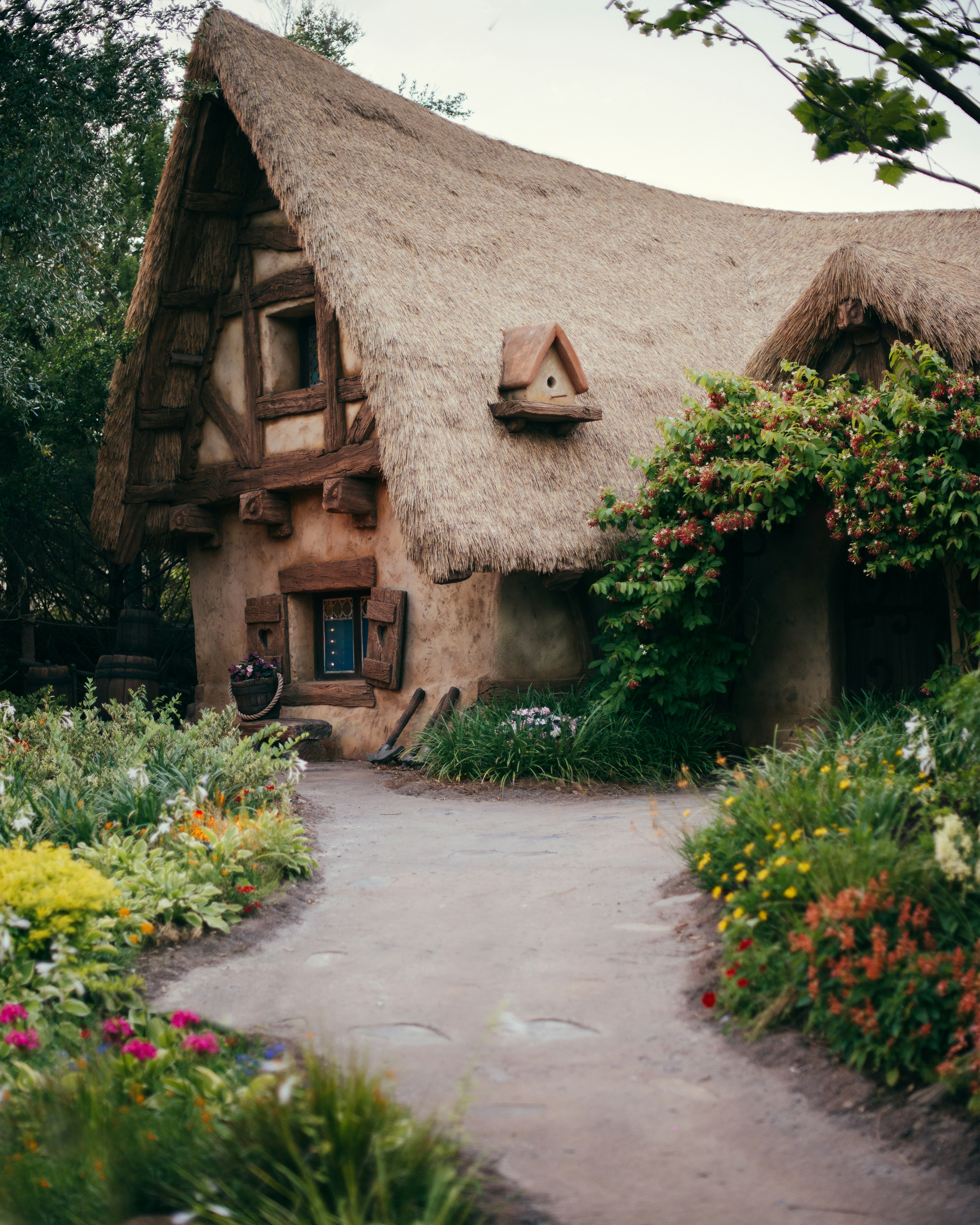
The Legacy of Rainbow Fairies

I’ve said before that fairy tales, as they were originally told and shared, weren’t strictly for kids. However, they certainly have become synonymous with children’s literature today. There are myriad reasons for that, but I wanted to take a closer look at one of them today: The Lang Fairy Books.

Continue reading “The Legacy of Rainbow Fairies”

Fairy Tales and the Rule of Three

The number three crops up a lot in fairy tales. Three wishes, three princes on a quest, three trials to overcome, three nights at a ball. But is that just a coincidence, or is there a deeper reason behind the choice of number?

(Of course there’s a deeper reason. I wouldn’t be writing this blog post if there wasn’t!)

Continue reading “Fairy Tales and the Rule of Three”

Fairy Tale Facts: The Firebird and Princess Vasilissa

Phoenixes are representative of renewal, rebirth, a fresh start, so it felt appropriate to kick off the new year with a closer look at a story featuring one.

“The Firebird and Princess Vasilissa” comes from Russian Fairy Tales (or Russian Folk Tales). It is one of the largest collections of fairy tales in the world, featuring over 600 stories across 8 volumes from Russia, Ukraine, Belarus, and the surrounding areas. The stories were collected and published by Alexander Afanasyev between 1855 and 1867. A translation of “The Firebird and Princess Vasilissa” can be found here, if you want to read it yourself.

Continue reading “Fairy Tale Facts: The Firebird and Princess Vasilissa”

Reflecting on 2025

The year is drawing to a close, and as I’m starting to look forward and make plans for the next few months, I find myself looking back on 2025.

If you follow me on Instagram, you might have seen my big news from this week: I finished the first draft on the manuscript I started in November! It’s messy, it needs a lot of work, and it’s nowhere near ready for people to read, but it exists now, and that’s such an incredible feeling.

It’s rather appropriate, I think, that I finished draft one only days before the year ended, because while I was only actively working on it the last few months of the year, it really was the result of a whole year’s work.

As much as I’m an introvert, I’m a person with a lot of passions and hobbies, and a lot of them take up time. I spent most of my life involved in theater, and I really love to craft (knitting and cross stitch, most often). Add in the D&D game I run and time to read or relax, and my free time disappears very quickly.

There have been plenty of times over the years when I’ve decided to try prioritizing writing, to varying degrees of success. And while I wish I knew why it worked so much better this time around, all I can say is that something just clicked.

I found a sustainable blogging schedule. I set up a dedicated writing space and created invigorating writing habits. I started writing again, not just daydreaming.

And I worried – of course I did – that the burst of creativity I felt wouldn’t last, that the habits I tried to form wouldn’t be sustainable. But somehow I made it work.

It wasn’t smooth sailing, by any means. I had to make adjustments as I went, had to accept that some days when I should have been writing I just couldn’t, but honestly, I think maybe the reason I did make it work was that I didn’t expect perfection this time around. I knew things would be rough, and I allowed myself to skip days if I needed to, to write badly, to be distracted (but only on rare occasions).

Holding myself to impossible standards never accomplished anything.

Instead, I tried to focus on the joy I have in the creative process, the fun it is to just sit down and make something. To let my imagination run wild and see what happens.

If I had to sum up my creative year in a word, I think it would be acceptance, which I know sounds like a less-than-great thing. But it really is the thing that fueled my success.

I had to learn to accept that I couldn’t do everything, so I had to pick what to focus on. I was once again reminded that, in writing and publishing, the finished product looks different from the early version and is the result of work from many hands, so I couldn’t reasonably expect the first draft to look like a final one. I also came to accept that I could and should be proud of my work, with no excuses or qualifiers.

Photo by Markus Winkler on Unsplash

As far as 2026 looks, I’m taking a bit of a break from my current manuscript, now that the first draft is done. I’ve learned the value of letting something rest and coming back to it when it’s not so fresh in my mind, but later in the year, I’ll start diving into edits. I might start brainstorming or working on a new project in the meantime, but I also might take some time to further work on my D&D campaign (though my players might not thank me for that!). I’m trying to balance the different types of creativity I enjoy, so if you follow me on Instagram, keep an eye out for some of the more hands-on crafts I might dive into.

What accomplishments are you proudest of from 2025?

Until next time, word nerds!

Myth or Magic: Are Fairy Tales for Kids?

I got a really great question in the comments of my last Myth or Magic post (leave your own for me to answer in future installments):

Why did Disney pick gruesome fairy tales and try to make them the happily ever after versions we know? Were there no happy and well written fairy tales they could have started with instead?

DisneyFantatic35

And, well, I can’t really answer that question, as I don’t work for Disney and couldn’t begin to pretend I understand the business practices and creative processes involved in choosing and adapting fairy tales. But it sparked a really interesting research tangent for me, and rather than let that time be wasted, I thought I’d share my findings.

Because the truth is, while we consider fairy tales to be a staple of children’s literature and media today, fairy tales weren’t actually created for kids.

Continue reading “Myth or Magic: Are Fairy Tales for Kids?”

The Brains Behind The Beauty (and the Beast)

Fairy tales are a beautiful genre of literature, tracing cultural mindsets and priorities through time and across the globe. Their origin as oral tales makes them profoundly unique, as no two tellings were ever exactly the same. But at the same time, that can make it hard for anyone to trace their history.

There have been countless people who have collected, transcribed, created, and otherwise contributed to the genre of fairy tales we know today. I’ve talked about some of them before, and those are the ones that most people (or most people with an interest in fairy tales) know about, the big names.

But they’re far from the only ones. And I thought it was high time I started highlighting some of those less-well-known fairy tale writers.

Continue reading “The Brains Behind The Beauty (and the Beast)”

8 Books to Read If You Love Wicked

Wicked: For Good premieres this week, and as a full-blown theater kid, you’d better believe I’m losing my mind about it. My best friend and braintwin (the Glinda to my Elphaba but with less drama in our shared history) is coming for a long weekend so that we can hole up in the theater with several boxes of tissues to watch the double feature of both films and almost certainly lose our cool.

And although I’m in the depths of writing a novel this month, I couldn’t help but put together a list of Wicked-inspired reads for fellow fans. Some of them I’ve read, some I’m adding to my own TBR.

Continue reading “8 Books to Read If You Love Wicked”

Beyond the Page: My 6 Favorite Fairy Tales on Stage

I’ll be the first to admit that the stage may be one of the hardest places to adapt a fairy tale. After all, a key element of any fairy tale is the magic that is inherently missing in our everyday life. While special effects can mimic magic, movies and animated features have an advantage in that respect over the stage’s reliance on practical effects, suspension of disbelief, and imagination on the audience’s part.

Nevertheless, there are many adaptations of fairy tales that have featured on stages around the world which, in my opinion, are magical in their own right.

Continue reading “Beyond the Page: My 6 Favorite Fairy Tales on Stage”

What’s In a Name

Romeo and Juliet has never ranked among my favorite of Shakespeare’s plays, but I have to admit there are some lines from it that have stuck with me.

“What’s in a name? That which we call a rose
By any other word would smell as sweet.
So Romeo would, were he not Romeo called,
Retain that dear perfection which he owes
Without that title.”

Romeo and Juliet, Act 2, Scene 2

It’s a beautiful sentiment Juliet expresses here, explaining that Romeo’s name, the hated name of her family’s enemy, doesn’t matter to her. It’s Romeo’s self that has captured her heart. If he changed his name, it wouldn’t change who he is.

But as the story plays out, the pair are unable to shed the burden of their names, which ultimately results in tragedy.

Names carry a lot of meaning in literature, especially in folklore, fairy tales, and mythology.

Continue reading “What’s In a Name”