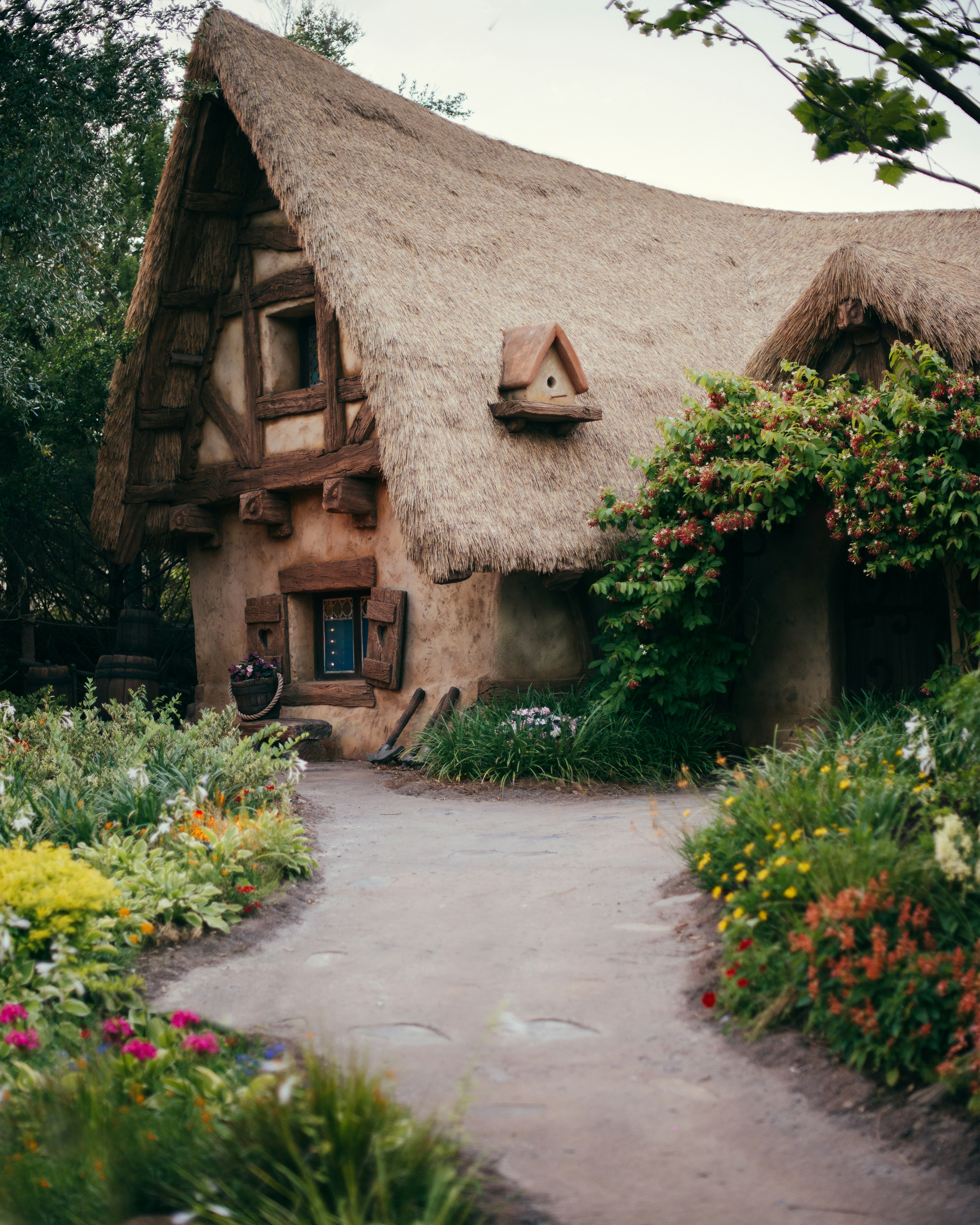
If I were to describe an isolated house in the woods that children are welcomed into for food and safety, would you know which fairy tale I was talking about?
If you said Little Red Riding Hood, you’re right! But if you said Hansel and Gretel, you’re also right!
Fairy tales rely a lot on tropes and archetypes to relay information. Being as short as they often are, they need a recognizable shorthand so audiences know who to root for and what’s going on.
What’s interesting to me, from a literary standpoint, is that occasionally, we’ll see a fairy tale take one of those archetypes and use an inversion of it. It still makes a point, but not the one originally intended.
Take, for instance, the kindly old grandmother.
Provision and Protection
Let’s start by looking at a classic example: the grandmother from the Grimm Brothers’ Little Red Cap (more commonly known as Little Red Riding Hood).
The very first thing we learn about Little Red’s grandmother is that she loves her granddaughter dearly and gives her a meaningful gift. There’s obviously a strong bond between them, as evidenced by the fact that Little Red is then tasked with bringing cake and wine to her grandmother, who is ill. This sickness, in addition to her very isolated home, show great vulnerability on the grandmother’s part – a vulnerability soon preyed upon by a wolf who encounters Little Red in the woods. The wolf then poses as the grandmother in order to take advantage of the trust between her and Little Red, ultimately eating them both.
I had intentionally chosen the Grimm Brothers’ version of this story to more directly compare it with another of their stories below, but it also had a really interesting epilogue. After the adventure of with the wolf, Little Red has learned her lesson about wandering in the woods, but she and her grandmother actually have another encounter with a wolf.
Little Red is visiting her grandmother (now recovered) again and puts to good use the lesson she learned when she encounters another wolf on the path through the woods. This time, she beats the wolf to her grandmother’s house, and the pair lock the beast out, refusing to open the door. The grandmother is able to concoct a plan to trick and kill the wolf, bringing the story full circle.
The story of Little Red Cap positions the grandmother very clearly as a provider and protector for Little Red, prioritizing her safety and teaching her valuable lessons. The grandmother relies on her wits rather than strength, and she can be taken off guard and made a victim. But ultimately, the love she has for her granddaughter wins the day.
Tricks and Traps
On the surface, the witch in Hansel and Gretel has a lot in common with Little Red’s grandmother. A kindly old woman with a house made of baked goods who welcomes in lost children, providing them with shelter and a tasty meal? She has all the markers of a fairy tale grandmother. After all, we’ve already gotten a villain in the evil mother (or possibly stepmother, depending on the version you read), and the children followed a bird to the gingerbread house, which feels like a rescue, not a trap.

The narrator is quick to reveal that it’s all a false front. While the children are asleep that night, she locks Hansel away, and when Gretel wakes up the next morning, she finds the sweetness from the day before has melted away to reveal a bitter new life – hard work in the witch’s service while she fattens up Hansel. Because this witch doesn’t just trap children; she eats them.
This dark grandmother is the opposite of everything we’ve seen in Little Red Cap. She captures and imprisons children, rather than offering them safety. Her affection toward them is fake. She feeds them, but only for her own selfish purposes. She teaches Gretel, but to her own detriment, as Gretel takes the opportunity to kill the witch.
I think that’s what makes the witch so terrifying. She should be someone the children can trust. Instead, she’s the greatest danger to them.
Who are your favorite fairy tale mirrors? Are there other archetypes you’d like to see me explore?
Until next time, word nerds!

