Stuck in a Tower

Dear Fairy Godmother,

I have seriously got, like, the worst parents ever! They are so strict! I keep trying to get them to loosen up, but no amount of arguing works. They can’t believe that I’m growing up. They might as well lock me up in a tower somewhere for all the freedom I get.

How can I make them see me as a responsible young adult?

A Total Rapunzel

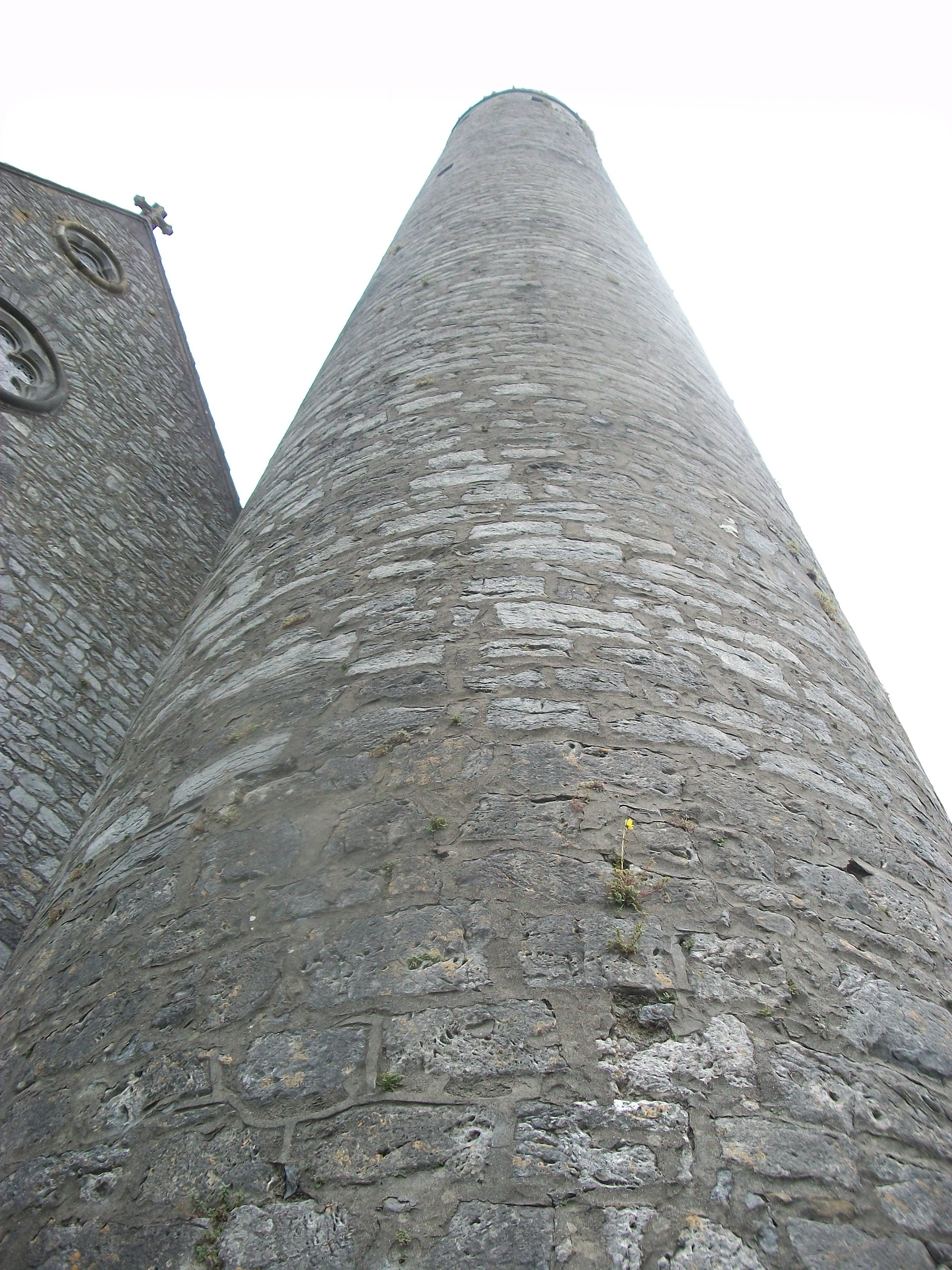
102_3178

Dear “Rapunzel”

I’m truly sorry you feel so trapped. In regards to your situation, I have two pieces of advice.

First, try to see your parents’ point of view. It might be true that they are having trouble seeing you as grown-up, but that’s because you are their little girl. They instinctively want to shelter you from the troubles of the world. 

Second, the best way to prove to your parents that you are responsible is to be responsible. Ask for small concessions or changes and show that you can handle them. Don’t throw tantrums when you don’t get your way. Use logic and reason instead of arguments and emotions. They’ll respect you for that.

The most important thing I can encourage you to do is simply to talk. Tell your parents how you feel and listen to what they have to say with an open mind. Compromise isn’t easy, but it is well worth the work. I wish you the best of luck in this adventure.

And remember, never stop dreaming!

Your Fairy Godmother

Why the Best Ones Die

Gandalf. Obi-Wan Kenobi. Mufasa. Have you started crying yet?

In so many fantasy stories, and some of our favorite Disney movies too, we are faced with the death (however brief) of beloved characters. Aside from the fact that writers are cruel, inhuman monsters who like to toy with the emotions of readers and movie-goers, there are actually two reasons we are so often faced with the characters we love so much.

1. To force the hero into action. When faced with a perilous journey, many young farm boys or other unassuming heroes-to-be are reluctant to begin their quest. Often they will completely refuse to leave home. At such a time, the hero can only be spurred into action by the death of someone important. It’s harsh, but it will set the hero on a path of vengeance, or show just how evil the antagonist can be. The hero becomes determined to defeat said evil and save the world!

2. To allow the hero to save the day. Heroes almost always have mentors. The one who teaches the hero about magic, fighting, morals, and other useful things. Unfortunately, as long as that mentor is around, the hero will rely on him or her. In order for the hero to realize his (or her) true strength, the mentor can’t be in the picture.While this can be accomplished with distance, death is more permanent at least, the hero thinks so).

Granted, Mufasa’s death doesn’t seem to fit these categories. I think of it as a delayed reason to fight.

Who are some of your favorite characters who met an untimely demise?

Until next time, word nerds!

But What About Me?

Dear Fairy Godmother,

I have a stepsister and I’m tired of being overlooked, or worse, cast as the villain. Cindy is a nice girl. She has a hard time getting along with my mother, true, but they both try their best.

Despite what you may have heard, we all pitch in around the house as much as we can, but she insists on letting mice and birds help her with the chores. It’s a little unsanitary if you ask me.

Don’t get me wrong; I’m happy for Cindy. She’s always been quiet, a homebody. I’m glad she’s met her Prince Charming. But I want a fairy tale ending too!

Please help!

An Overlooked Step-sister

Dear Overlooked Step-sister

Believe it or not, yours is a common situation. My first piece of advice would be to locate the nearest branch of Stepsisters Anonymous, a support group for stepsisters who are forgotten, misrepresented, or threatened by their stepsiblings. You’ll find a wonderful group of women there.

As for your own happy ending, follow Cindy’s example. Go out, meet new people. The best way to meet your own Prince Charming is to be social. Be confident, be beautiful, and be yourself.

And remember, never stop dreaming!

Your Fairy Godmother
A History of the Fairy Tale

Fairy tales have been passed down orally for centuries, so it’s hard tor trace their exact history. However, once they were written, it becomes easier to see how they’ve grown and change. But where did these stories of the fantastic come from?

I may not have precise answers, but I can talk about where the fairy tale genre first appeared and how others have defined it. (This is a really great article if you have time for a more in depth look; it explores four theories about where fairy tales might have come from.)

The best way I can explain the history of fairy tales is to look at the first few authors of them. Like my recent post about The Big Three, I’ll look at the three authors who were the famous first writers and collectors of fairy tales.

Madame D’Aulnoy

Marie-Catherine Le Jumel de Barneville, Baroness d’Aulnoy, also called the Countess d’Aulnoy, was a French aristocrat in the late 17th century. She was an intellect, hosting famed scholars and other nobles in her salon to talk about the world. She was also an accomplished writer. Over the course of 13 years, she published 12 books, 2 of them collections of fairy tales. She named her works contes de fées, or tales of fairies, originating the term “fairy tales” we now use. Madame d’Aulnoy’s stories were written in a conversational style, as they would have been told in a salon.

A popular salon game of Madame d’Aulnoy’s time was to make up fairy tales; to take the elements of magic, social commentary, and good triumphing over evil and make a new story. This practice helped solidify the different aspects of the fairy tale genre.

Giovanni Francesco Straparola

(I couldn’t find a picture of him.)

Giovanni Francesco Straparola was an Italian writer during the late 15th and early 16th centuries. He collected fairy tales. He published a two-volume set of 75 stories, some of which are the earliest written versions of more famous fairy tales.

Giambattista Basile

Giambattista Basile was a Neapolitan soldier during the late 16th and early 17th centuries. A poet and a writer, Basile was most famous for his collection of children’s stories, which the Grimm Brothers later praised as the first national collection of tales. His work contains the earliest written version of  Rapunzel and Cinderella, as well as others.

Basile and Straparola were some of the first people to listen to what tales were being told and collect them to publish. Because of their initiative, we have the fairy tales we do today. Madame d’Aulnoy recognized them as more than just children’s stories, as their own genre of literature.

So now you know a little more about where fairy tales come from! What are some of your favorites?

Until next time, word nerds!

Fairy Tale Facts: Rapunzel

I can’t believe I haven’t talked about Rapunzel yet! So here I go! It was first published by the Brothers Grimm in their 1812 collection, Children’s and Household Tales.

What It’s About

A young wife is pregnant. A window in her house overlooked a garden of a powerful enchantress. Day after day, she would sit at the window and look at the rampion plant and wish she had some to eat. Eventually she became sick. Her husband grew worried and asked what he could do to help. She demanded rampion, or else she would die. The husband reluctantly agreed to get her some. That night, he scaled the wall around the garden and took some of the rampion. He returned the next night to retrieve more, but was confronted by the enchantress. When the husband explains he stole for his pregnant wife, she agrees to give him as much rampion as he wants on one condition; he must give the enchantress the child after it is born. The man agrees and when the baby girl is born, the enchantress takes her away and names her Rapunzel. When Rapunzel was twelve, the enchantress shut her in a tower in the forest. There were no doors or stairs. The only way up was to climb Rapunzel’s long, golden hair. A young prince one day finds the tower and, overhearing the enchantress’s words, makes his way up Rapunzel’s hair. The two fall in love and devise a way to get Rapunzel out of the tower. Then she stupidly mentions to the enchantress that she’s much heavier than the prince when climbing her hair. The enchantress is furious and cuts off Rapunzel’s hair, banishing her too the desert alone. Meanwhile, the prince returns and climbs the hair thrown down to him. The enchantress angrily tells the prince that Rapunzel is gone and he will never see her again. He jumps from the tower to escape and somehow survives, but he lands on a thorny bush, which blinds him. So he wanders around the forest for a few years (the story says lamenting the loss of his wife, but it never says when they were married). Eventually he stumbles upon the desert where Rapunzel is living with, surprise!, twins; a boy and a girl. Rapunzel cries on the prince’s face and he can see again! Happily ever after, the end, etc.

Fun Fact #1

Different versions of the story have different phrases that Rapunzel responds to: “Rapunzel, Rapunzel, let down thy hair”, “Rapunzel, Rapunzel, let down your hair, That I may climb the golden stair”, or some other variation of that.

Fun Fact #2

Another name for the rampion plant is rapunzel. So the enchantress named the girl for the plant that got her parents into the mess in the first place. Kind of asking for trouble, don’t you think?

Fun Fact #3

The plan Rapunzel and the prince came up with to escape involved several skeins of silk; every time the prince visited, he brought one to Rapunzel, who wove them into a ladder. Why it has to be one at a time, I don’t know. Sadly, they never get to use the ladder.

Fun Fact #4

The enchantress’s name, or at least the name Rapunzel uses to refer to her, is Dame Gothel.

If You’re Interested….

Disney’s Tangled takes the story of Rapunzel and turns it into a fun-filled, musical adventure. There aren’t a whole lot of similarities to the original story, but it’s still a great tale.

Do you have any favorite adaptations of Rapunzel?

Until next time, word nerds!

Words About Introverts

Now, I don’t mean to discriminate against extroverts or ambiverts, it’s simply that I have more experience with introverts (namely, I am one), so today’s topic is debunking a few popular myths about introverts. I should also add that introverts do often display these characteristics. I only mean to say that you can’t assume things about a person because they have an introverted personality. The same goes for any sort of label, really. If any of you extroverts or ambiverts want to give me information about your personality type, I’d be happy to do a video about that!

Until next time, word nerds!